Reading | 5 min


 |
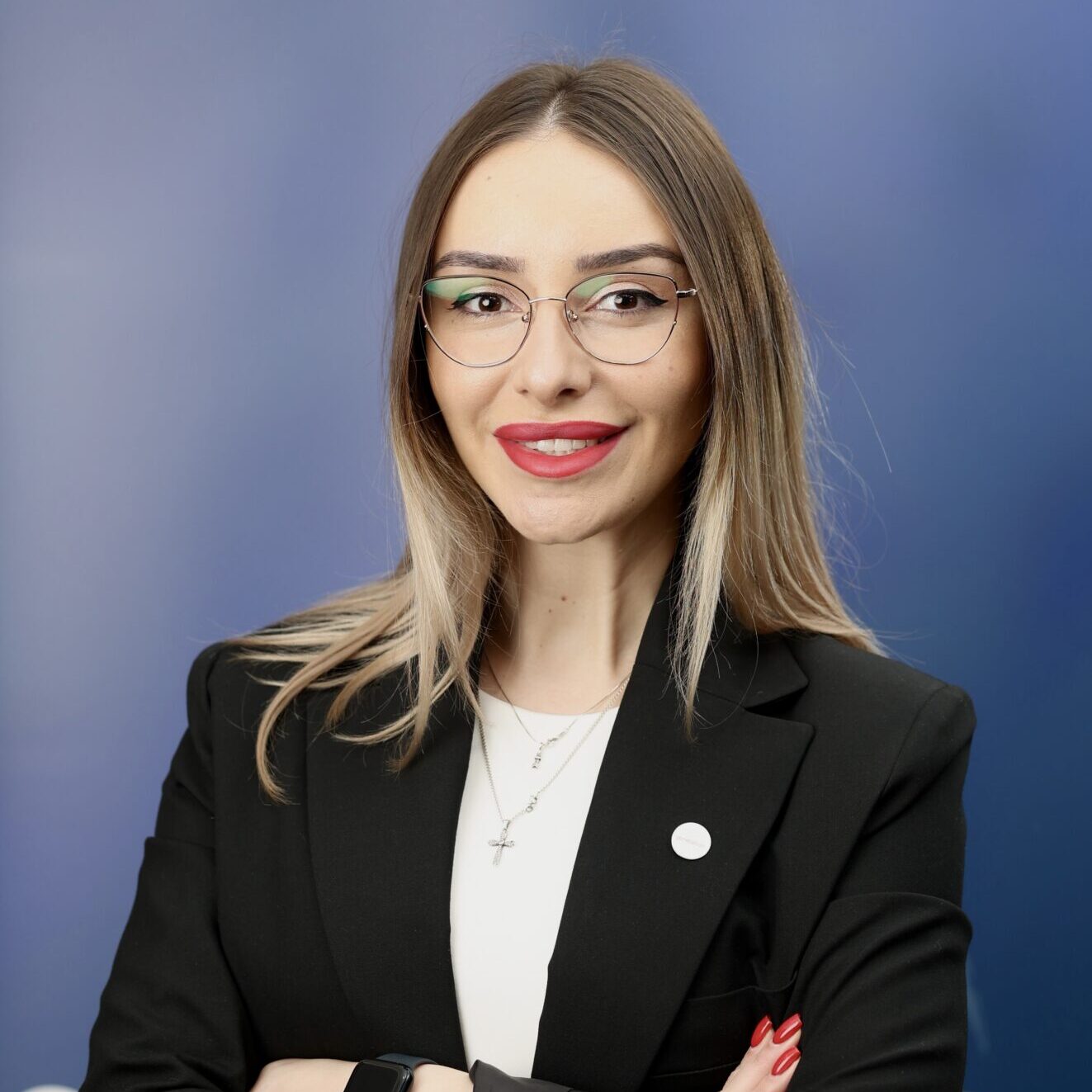
Written by Marie KikvadzeMember of EDYN GeorgiaCommunications Expert in Climate, Energy & Just TransitionFounder & CEO of UpComRise Agency |
When I first started working on climate and energy programmes, I thought the biggest challenge would be technical, understanding policies, reforms, and systems. But over time, I realised that the real challenge is much simpler and much harder at the same time: how do we make these policies work for people?
Climate policy is often framed in terms of targets and transitions. However, the transition we are talking about is not only green it is social, political, and deeply human. And if it is not fair, it will not work.
The transition we don’t talk about enough
In many policy discussions, the green transition is presented as something universally positive. And it is. But in practice, its effects are uneven.
In Georgia, I have seen how energy reforms, while necessary, can feel distant or even burdensome for certain communities. For a family in a rural area, energy efficiency is not just about sustainability; it is about affordability. For young people, the idea of a “green economy” is often abstract, unless it connects to real opportunities.
This is where the idea of a just transition becomes real. It is not a slogan. It is a question: who benefits, and who is left behind?
What I learned from working with communities
One of the most defining experiences for me was leading a regional energy efficiency campaign that worked across multiple regions and brought together hundreds of local organisations, schools, youth groups, and media actors.
At the beginning, the approach could have been straightforward: raise awareness, share information, run campaigns. But what made the difference was something else.
We worked with local civil society so called community based organisations who understood their communities far better than any national-level strategy ever could. We engaged young people not only as participants, but as co-creators through camps, school activities, and community initiatives. We developed formats that made the topic tangible, from interactive tools to local events. We also engaged national media with local focus to promote the content among wider public. And slowly, something shifted. People were not just receiving information, they were starting to relate to it.
Changing narratives through media and partnerships
Another experience that shaped my thinking was working on a media and civil society twinning programme. The idea was simple: connect journalists with civil society organisations working on environmental and climate issues, and support them to collaborate. However, the impact was deeper than expected.
Journalists began to tell different stories not just about policies, but about people. Civil society actors learned how to communicate their work more effectively. And audiences were exposed to climate issues in a way that felt closer to their everyday lives. This experience reinforced something I keep coming back to: policy alone does not create change but narratives do.
And narratives are shaped by who is involved in telling them.
Why just transition matters in practice
The more I worked across different programmes, the clearer it became that climate policies often struggle not because they are wrong, but because they are incomplete. They focus on what needs to be done, but not always on how it will be experienced. Based on my experience, a just transition, in practice, means: understanding different starting points; recognising inequalities; and creating space for participation that is real, not symbolic.
It also means accepting that transition is not only about infrastructure or investment, it is about trust. And trust is built through inclusion. As highlighted in broader human rights and youth engagement frameworks, participation is not only a value it is a condition for effective and sustainable policy outcomes .
The role of youth, civil society and increasingly, business
In many contexts, especially where institutional cooperation is limited, I have seen civil society and youth networks step in to fill the gap.
They create spaces for dialogue. They translate complex policies into something understandable. They bring in perspectives that would otherwise be missing.
Young people, in particular, are often more open to connecting climate issues with questions of fairness, opportunity, and justice. But their role is still too often limited to participation in campaigns, rather than decision-making.
At the same time, there is another actor whose role is becoming increasingly important: the private sector.
In my recent work, I have seen how businesses are starting to move beyond traditional CSR approaches. There is growing interest in sustainability, ESG, and social impact not only as a requirement, but as part of long-term positioning. Not a surprise here too, the same challenge applies. Without meaningful engagement with communities, without understanding local realities, even well-funded initiatives risk remaining superficial. There is a real opportunity for businesses to become part of the solution not only through funding, but through partnerships that are grounded in real needs and real impact. One of the best examples for this could be sustainable programmes that make real impact, rather than stand alone fancy activities with limited potential of positive change.
Looking forward
If there is one thing I have learned from working at the intersection of policy, media, businesses, and communities, it is this: Fair and Just transition cannot be designed only at the top. It needs to be shaped through continuous dialogue, through experimentation, and through listening to those who are most affected by it.
This means:
- treating participation as part of the process, not a formality
- investing in people, not only in policies
- building partnerships across sectors
Conclusion
The green transition is often described as a technological shift. But in reality, it is a societal one.
And societies do not change through policies alone. They change when people feel part of the process.
For me, a just transition is not an abstract concept. It is something I have seen in small but meaningful ways in a classroom discussion, in a local campaign, in a story told differently.
These moments may seem small, but they are what make larger transformations possible.
Because in the end, the success of the green transition will not be measured only by emissions reduced, but by whether people feel that this transition also belongs to them.